Fascia, Emotions & Pain: Why Your Body Holds Stress in its Tissues
What is Fascia?
Fascia is a continuous spider web - like network of connective tissue that connects the entire body & the mind- body unit together. (Because of its vast attachments with the nervous system)
It also surrounds, interpenetrates and supports the body by providing structural integrity to the bones, blood vessels, nerves, lymph, organs, muscles and tissues. This network of connective tissue allows for fast communication through out the entire body, nervous system and brain via its approximately 250 million nerve endings.
(Massively more than the skin & muscular system. It is widely acknowledged as the largest sensory organ)
Additionally, fascia plays a vital role in our movement and mobility as it surrounds every muscle it allows for them to glide smoothly over each other and distributes mechanical force along the fascia when walking or jumping for example.
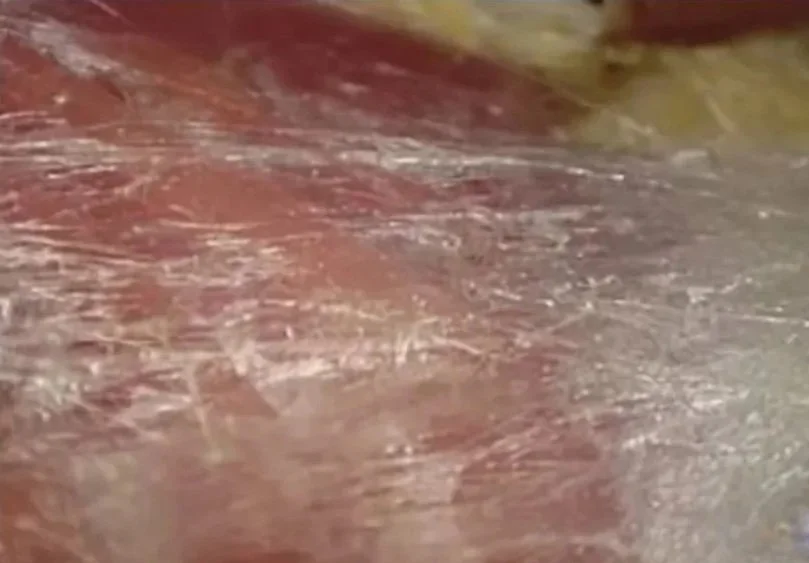
Fascia
Fascia & Emotions
The fascia’s extensive nerve endings connect with the autonomic nervous systems (Parasympathetic nervous system- Rest & Digest and Sympathetic nervous system- Fight/Flight/Freeze)
When a person experiences emotional stresses, the bodies sympathetic nervous system reacts by signaling to the fascia and muscles to harden in order to try and protect the body like armour.
After a stressful event the stress hormones such as cortisol and adrenaline are released into the body which can cause the fascia to dehydrate and tighten.
It is believed that fascia can store trauma which may explain why tight, dehydrated fascia may persist even after the traumatic event has passed.
Lastly, through a system called interoception (the sense of the body’s internal state), the fascia communicates with the brain sending information about pain, safety and emotions which can effect our emotional health and well being. This system can also be positively influenced through releasing tight fascia which can then allow the brain to receive signals of safety.
Pain & Mobility
When fascia becomes dehydrated and tight, the muscles lose their smooth glide causing adhesions, stiffness, limited range of movement and pain.
Tom Myers (fascia expert/pioneer) believes there to be various “Myofascial meridians/lines” that connect specific parts of the body in different ways.
There have been studies which have confirmed the presence of various myofascial lines; in a study by Wilke et al (2016), it was concluded that by stretching the calves and hamstrings a person can improve the extension and flexion range of movement in the neck. “Our data point towards existence of a strain transfer along myofascial meridians.”
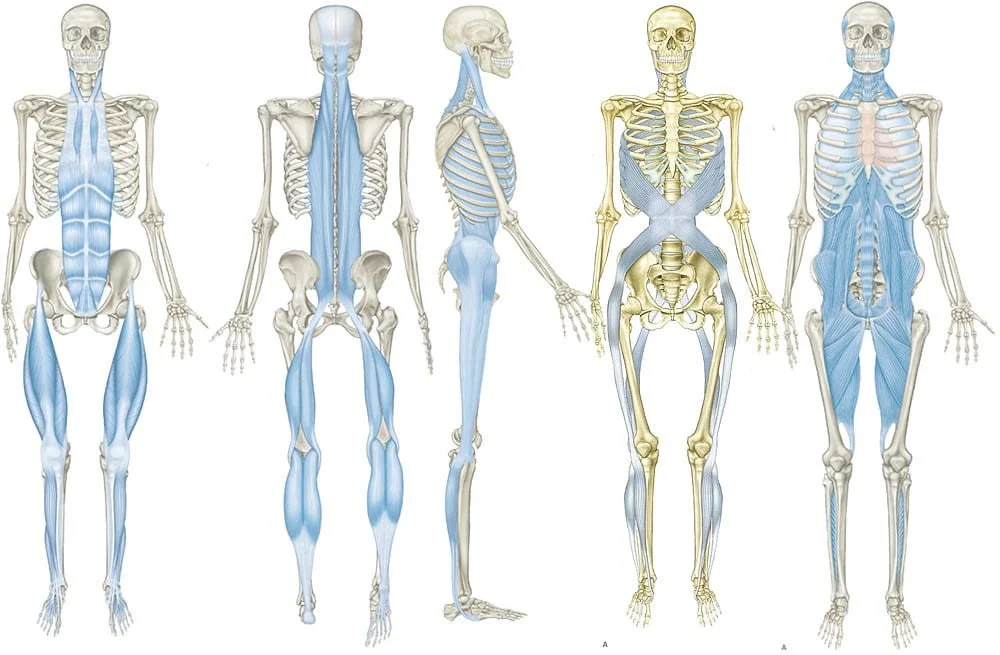
Various Myofascial Meridians / Lines
Maintaining healthy fascia
Fascia is comprised of mostly collagen, elastin and water. Collagen is needed for repair and the structural strength of the fascia, elastin allows the fascia to be elastic, to stretch and return to its shape. It also provides shock absorption from running or a physical trauma for example, whilst within the deep fascia it assists with the smooth gliding of the fascial layers over each other for effortless movement.
Extra info:
Dry cupping encourages the body to produce collagen, release tightness and re-hydrate the fascia.
To read more click here for my blog on the benefits of dry cupping.
Do’s
Drink plenty of water to stay hydrated.
Keep electrolytes in balance as they allow the cells and fascia to absorb water and nutrients whilst providing energy to the muscles.
Stay active as being sedentary causes the fascia to dehydrate and tighten. Things like walking, stretching, exercise, massage therapy and dry cupping (had to get that in there :P) will help keep fascia healthy and hydrated.
Try to manage stress. Simple things like meditation, deep breathing with longer exhales can make a big difference in regulating your nervous system. (So does Reiki healing therapy)
Strength training can strengthen the fascia regarding force distribution.
Thank you for reading.
If you would like to book an appointment with me click here. I look forward to working with you.
Aycan (I-jân)
Bibliography
Links are clickable:
Jan Wilke, Daniel Niederer, Lutz Vogt, Winfried Banzer, 2016 “Remote effects of lower limb stretching: preliminary evidence for myofascial connectivity?”
Bruno Bordoni, Fabiola Marelli, 2017 “Emotions in Motion: Myofascial Interoception”
Yuya Kodama, Shin Masuda, Toshinori Ohmori, et al. 2023 “Response to Mechanical Properties and Physiological Challenges of Fascia: Diagnosis and Rehabilitative Therapeutic Intervention for Myofascial System Disorders”
Alison M Slater, S Jade Barclay, Rouha M S Granfar, Rebecca L Pratt, 2024 “Fascia as a regulatory system in health and disease”
The Guide to Modern Cupping Therapy by Shannon Gilmartin 2017 (book)